Friday, November 27, 2009

Thanksgiving a la Movies

Of course, we cooked for Thanksgiving, and we used recipes that we've written for Cooking with the Movies. How could we pass up an opportunity for another taste-testing?

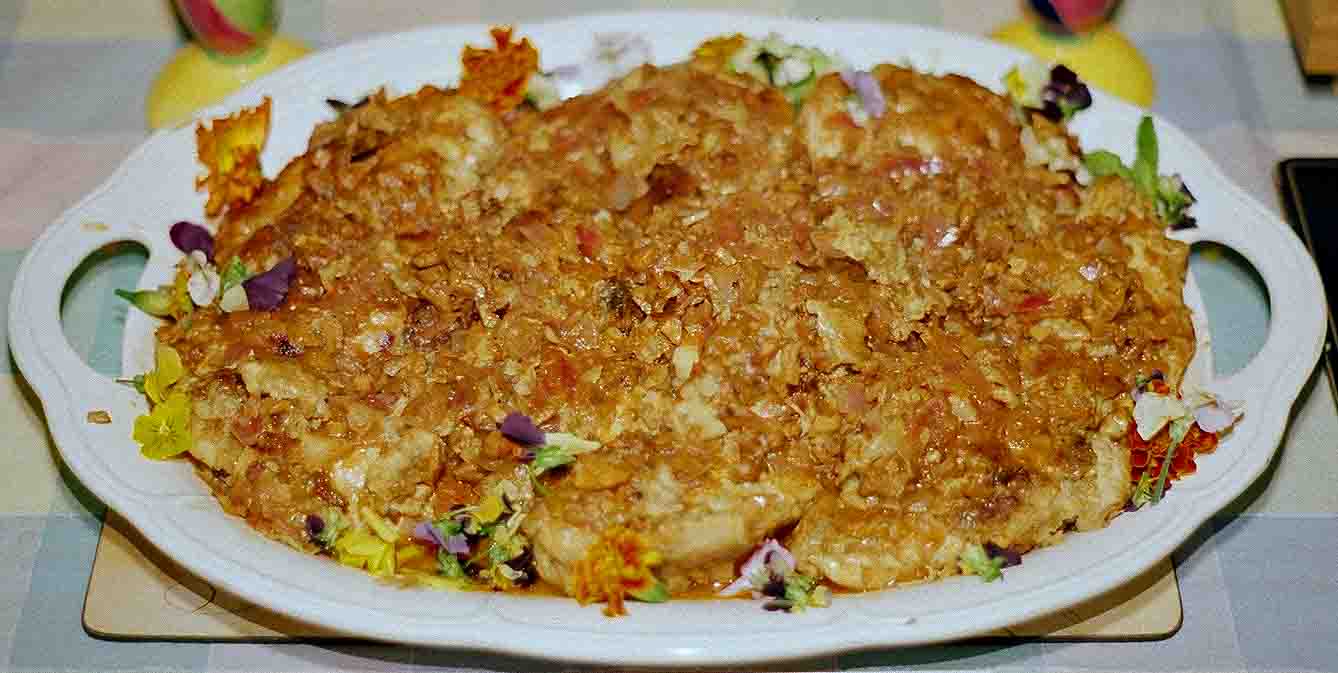
The turkey was Pavo Mexicano (Turkey Mexican-style) with mixed vegetable stuffing from the film What's Cooking?:
We provided an assortment of cheeses (not from a film, but it's a nice spread) with guacamole and pate:

These are the Candied Sweet Potatoes with Walnuts, Cranberries, and Marshmallowettes from the movie Once Upon a Time When We Were Colored:

Southern String Beans, from the same film, simmered with bacon for two hours--just amazing!

A few of our guests, in mouth-watering anticipation:

Dixie Biscuits with Fig Jam:
Cousin Beauty's Sweet Potato Pie:

Mississippi Delta Jelly Cake:

Rusty, proud chef and host:

Thursday, November 19, 2009

"Dinner and a Movie"?

Last Saturday, Rusty and I attended a showing of What's Cooking? that was sponsored by the Sundance Outdoor Adventure Society. Our host cooked a delicious turkey, a wonderful butternut squash soup, and a yummy oyster stuffing. We brought a salad and cherry pie, our version of what was served in the movie itself. We talked about the movie and the meals/food depicted during dinnertime, and we added running "food" commentary as the guests asked us questions during the film itself. It was great fun to meet new friends too. Thanks to Sundance for the invite.

Sunday, November 15, 2009

Babette's Feast

Finally, we accomplished the dinner from Babette's Feast.

Potage à la Tortue (Turtle Soup)

Blinis Demidoff au Caviar (Buckwheat Cakes with Caviar)

Cailles en Sarcophage avec Sauce Périgourdine (Quails in Pastry Puff Shell with Foie Gras and Truffle Sauce)


La Salade (Salad Course)

Les Fromages (Assorted Cheeses)

Happy diners:

Les Fruits (Assorted Fresh Fruit)

Savarin au Rhum (Rum Cake)

Monday, November 2, 2009

No Reservations

Therapist: Kids like fishsticks….
Kate: I can’t believe I’m actually paying for these suggestions.


Mostly Martha was remade in English as No Reservations, which starred Catherine Zeta-Jones as Kate and Aaron Eckhart as Nick, the two chefs with different approaches to both cooking and life. No Reservations draws heavily on Mostly Martha, essentially translating the plot to New York City; indeed, Carol Fuchs’ English screenplay draws very heavily on the original German screenplay by Sandra Nettelbeck. Directed by Scott Hicks, No Reservations has earned a total worldwide box office of more than $92 million, thanks in large part to Zeta-Jones’ audience appeal.

According to Hollywood lore, Zeta-Jones worked as a waitress at New York City’s Fiamma Osteria in preparation for her role as Kate. Many customers remarked that she resembled Catherine Zeta-Jones, to which she responded, “I hear that all the time.”

The movie also features Patricia Clarkson as Paula, Jenny Wade as Leah, Bob Balaban as the Therapist, Brian F. O’Byrne as Sean, and Lilly Rabe as Bernadette.

Although the film did not win critical acclaim when released in 2007, Abigail Breslin was nominated for the Young Artist Award for Best Performance in a Feature Film by a Leading Young Actress for her portrayal of Zoe. Ironically, this remake features a quite telling line, spoken by the therapist: “It’s the recipes that you create yourself that are the best.”


Mostly Martha (Bella Martha)


Mostly Martha is filled with wonderful advice for everyone who takes the creation of a meal seriously, whether he or she is a professional chef or a home cook. Because the film features two cooks with vastly different personalities and styles, the viewer benefits from their disparate perspectives.

Martha, the main character, is quite precise in her cooking: she runs her kitchen with a Teutonic efficiency and knows that any dish that she serves is cooked to perfection. When Frida, the Lido’s owner, hires another chef to help out, Martha responds with great anxiety: “Two chefs in one kitchen is like two people driving a car. It’s impossible.” Impossible, perhaps, if one chef wishes to maintain complete control and prevent any change. Even Mario seems to agree when he tells Frida, “It’s your restaurant, but her kitchen. Without her, it’s just a pile of metal.” The difference in their styles becomes evident when Frida decides to add gnocchi to the menu. Martha complains, “Gnocchi! Of all things!” to which Mario responds, “They have to be prepared with great care, that’s all. With gnocchi you have to take your time. They tend to get tough and inedible if you don’t do your best.” She asserts, “I always do my best,” and he counters, “With cooking, yes, you do.” Her final “Exactly!” ends the debate in her favor, in her mind.

While Martha prefers not to eat before starting her evening shift in the kitchen, Mario believes that eating is as essential as breathing. As he advises the staff, “Only a well-fed cook is a good cook. First you must saturate your taste buds and only then season to taste. If you’re satisfied on a full stomach, then you’re a really good cook.” Thus, he converts the staff’s pre-dinner menu meeting and snack into a relaxed and friendly family-style repast. While Martha’s staff always worked the dinner rush in near-silence, Mario plays music in the kitchen—and sings along!For his part, Mario knows that a kitchen cannot have two head chefs and allows Martha to maintain her position by publicly stating whether he should stay or leave. Despite her great reluctance, Martha eventually admits that having Mario around adds a certain “flavor” that she would not have been able to provide. He, after all, is the only one who can get Lina to eat anything, and she realizes that not only is the staff less uptight, even happier in their work, but that his joy of cooking can help her savor the foods and the experiences that had ceased to feed her soul.

Perhaps the message is not that “too many cooks spoil the broth” but that each cook can unlock different tastes that, together, create a delicious culinary masterpiece.

Like some food films, Mostly Martha likes to provide viewers with a certain degree of cooking instruction. For example, this is how chef Martha would prepare a certain special dish: “I love to serve them [pigeons] roasted. It gives them a more robust taste. A wonderful side dish would be ravioli with boletus, truffles, and wild mushrooms or chanterelles depending on the season. But you need a good pigeon. It must be meaty or it’ll dry out. You could also cook them in a pig’s bladder, in Madeira, cognac, and port. It keeps the pigeon well protected and juicy. Serve it with tagliatelle with spring onions, truffles and glazed shallots in a delicate thyme sauce. Truffles are perfect for any pigeon dish because the delicate pigeon flavor…. A wonderful starter would be a crayfish and mussels….” Although Lina tosses the truffles in the trash because of the smell, informed cooks and diners know what a special flavor just a tiny slice of truffle can add to a dish. In recreating the recipes from Mostly Martha, we took much of Martha’s fine cooking advice.

Released 2002
Written and directed by Sandra Nettelbeck
Starring Martina Gedeck as Martha Klein, Maxime Foerste as Lina Klein, Sergio Castellitto as Mario, August Zirner as Martha’s therapist, Sibylle Canonica as Frida, Katja Studt as Lea, Antonio Wannek as Carlos, Idil Üner as Bernadette, Oliver Broumis as Jan, and Ulrich Thomsen as Sam Thalberg


Awards: 2002 Créteil International Women’s Film Festival Grand Prix (Nettelbeck); 2002 European Film Award for Best Actor (Castellitto); 2002 German Film Award in Gold for Outstanding Individual Achievement: Actress (Gedeck); 2003 German Film Critics Association Award for Best Actress (Gedeck); 2002 Lecce Festival of European Cinema Special Jury Award and Students Jury Award; 2002 Mons International Festival of Love Films Awards for Best Actor (Castellitto), Best Actress (Gedeck), Best Screenplay, and Grand Prize; 2003 Muscat Film Festival Best Actor (Castellitto) and Silver Dagger (Nettelbeck); 2002 Nantucket Film Festival Screenwriting Award for Best Feature Screenplay

Martha: Not quite.
Therapist: Not quite?
Martha: Something’s wrong.
Therapist: But I made it just the way you said. I followed the recipe precisely, step by step. Exactly the way you wrote it down.
Martha: Did you prebake the crust for 15 minutes?
Therapist: Exactly 15 minutes at precisely 210 degrees Celsius.
Martha: Are you sure your oven heats up to 210 degrees when it’s set at 210?
Therapist: The thing is brand new.
Martha: Perhaps you kneaded the dough too long?
Therapist: Not a second longer than necessary!
Martha: Then it must be the sugar.
Therapist: The sugar?
Martha: Did you get the Belgian Vergeoise, like I told you?
Therapist: Are you telling me, you can taste what kind of sugar I’ve used?
Martha: Of course not. But I can taste which kind you didn’t use!
Therapist: I give up.

Sunday, October 18, 2009

Christmas in Connecticut


Awaiting rescue on a raft for 18 days after his ship has been torpedoed, Jones (Morgan) dreams about food and envisions his first meal: steak and baked potatoes, asparagus with hollandaise sauce, chocolate cake and ice cream. But the hospital food for the shipwrecked survivor is a big disappointment: a bowl of milk with a raw egg floating in the center—even though his shipmate dines on steak and chicken Maryland. Still dreaming of that special meal, Jones comes across the menu of the month by Elizabeth Lane, “America’s Best Cook,” in Smart Housekeeping magazine: a Christmas dinner featuring fresh fruit cup, olives, bouillon, roast goose Bernoise with walnut dressing and giblet gravy, cranberry-orange relish, buttered green beans, candied sweet potatoes, tomatoes, celery soufflé, hot rolls, lettuce with Russian dressing, and for dessert, mince pie, pumpkin pie, ice cream, old-fashioned plum pudding, fresh fruit, mixed nuts, mints, and coffee—an unheard of feast in wartime America.

Lane (Stanwyck) has a monthly magazine column called “Diary of a Housewife” in which she details domestic life on her farm in Connecticut—what readers don’t know, however, is that she lives in a flat in New York City, basing the descriptions of the farmhouse on that of her architect friend, Sloan (Gardiner), that she isn’t married and doesn’t have a baby, and that she doesn’t know how to cook! Yet her dinnertime preparations are mouthwatering to readers who are still enduring rationing: “I took crisp lettuce, romaine, and crinkly endive from my own garden for my husband’s favorite salad. For this I made a rich, creamy blue cheese dressing. Then to prepare roast duck his favorite way, I rub salt and pepper inside, then brown the duck in its own fat….” Her friend, Bassenak (Sakall), who owns a Hungarian restaurant around the corner from her apartment, provides the menus and recipes: breast of gray dove, sauté with peaches grenadine, chicken soup with Moselle wine—all for “no [ration] points,” an important consideration at that time.


The plot, and the menu, gets complicated when her magazine’s owner, Yardley (Greenstreet), compels her to entertain the shipwrecked sailor at her farm for Christmas: “You can imagine how much it’ll mean to him to have a nice homey Christmas with your wonderful cooking. … I follow your diary faithfully. … In October, when you had breast of guinea hen in Madeira, that was perfection. … And last June’s strawberries Chantilly with rum and egg white. You stiffen the egg white first, don’t you, before you add the rum?” After her fateful meeting with Yardley, Bassenak consoles her with a nice dinner: “Commence with an appetizer. Then I bring some nice chicken Budapest, some Brussels sprouts à la Felix, some potatoes au gratin. … Help yourself, darling. First some nice filet of marinated herring à la crème. … Artichoke hearts vinaigrette. … Bologna. … Horseradish. … Pickled walnuts.” In between the service, Lane agrees to marry Sloan, at his farm, on Christmas, and he agrees to entertain Yardley and Jones for the holiday.
The time at the farm is a comedy of double meanings and hidden identities, but among the most humorous moments are Lane’s efforts to flip pancakes; as Bassenak tells her, “Better you cook on the typewriter.” Under the pressure of an audience, however, she does manage to flip one perfectly—with her eyes closed!
Although the film does not depict Christmas dinner, it promises to be something extraordinary: potage Mongol, roast goose Bernoise, walnut stuffing, with the rest of the trimmings mentioned in Lane’s article.

Christmas in Connecticut was a great hit at the time of its release. Like most Hollywood films of the era, this amiable farce feeds audiences with laughs, romance, holiday cheer, and the promise of delectable meals, even if the heroine can’t cook. As Lane tells Bassenak, “You know, Felix, some time I’m gonna take time out and learn to cook like you do”; but he admonishes, “No, no, darling. Then you would find out it is not the way you write now. All easy and fun and--. Don’t cook.”


Released 1945
Directed by Peter Godfrey
Screenplay by Lionel Houser and Adele Comandini; story by Aileen Hamilton

Starring Barbara Stanwyck as Elizabeth Lane, Dennis Morgan as Jefferson Jones, Sydney Greenstreet as Alexander Yardley, Reginald Gardiner as John Sloan, S. Z. Sakall as Felix Bassenak, Robert Shayne as Dudley Beecham, Una O’Connor as Norah, Frank Jenks as Sinkewicz, Joyce Compton as Mary Lee, and Dick Elliott as Judge Crothers

Sunday, September 27, 2009

A Matter of Taste (Une affaire de goût)

Rousset: “His palate was so refined, everything had to be cooked in perfect harmony. Cuisine is an art in itself.”A Matter of Taste (Une affaire de goût) is an ambiguous movie: is it about auto-destructive behavior, manipulation, closeted homosexual passion, the moral corruption of wealth, or all of the above simultaneously? Whichever the reader finds it to be, the movie centers on food—specifically, the dishes that Rivière (Lorit) is hired to taste for Delamont (Giraudeau): pigeon casserole made with garlic, onion, lemon, and verbena tea; hors d’oeuvres with rabbit and black olive paste; five-flavor pork; fava bean and Parma salad; tripes à la grande-mère. There are also the foods that Rivière eats as part of his training (lobster, crab, shrimp, oysters, poached turbot with hollandaise sauce, apple tart) or recommends to his employer’s business associates (scampi with grapefruit and seafood). Unexpectedly, the personal taster is promoted to a much higher position—becoming a surrogate? a twin?—as Delamont compels Rivière to “taste” much more than what’s served at the dinner table, with fascinating and dire consequences for both men.

Released 2000
Directed by Bernard Rapp
Written by Bernard Rapp and Gilles Taurand; book Affaires de gout by Philippe Balland
Starring Bernard Giraudeau as Frédéric Delamont, Jean-Pierre Lorit as Nicolas Rivière, Florence Thomassin as Béatrice, Charles Berling as René Rousset, Jean-Pierre Léaud as Le juge d’instruction, Artus de Penguerm as Flavert, Laurent Spielvogel as Doctor Rossignon, and Elisabeth Macocco as Caroline
Awards: 2000 Cognac Festival du Film Policier “Unravel” Award, Critics Award, and Grand Prix; 2000 Karlovy Vary International Film Festival Special Mention