Saturday, April 3, 2010

The Big Chill

Michael (looking at the funeral buffet): Amazing tradition. They throw a great party for you on the one day they know you can’t come.


The Big Chill is known more for its depiction of human drama than for what it shows of food. In brief, seven college friends gather for a weekend to attend the funeral of one of their pals and fill one another in on what has happened in their lives during the fifteen or so years since graduation. Over the several days they are together, they consume one another’s stories and digest what each of them has done with their 60s idealism, but they also feast on turkey, spaghetti, salad, soup, bread and biscuits, apple pie, eggs, pancakes, and Chinese takeout. As filmmakers well know, sharing a meal is part of the bonding process, and reconnecting with old friends can trigger quite an appetite.


Released 1983
Directed by Lawrence Kasdan
Written by Lawrence Kasdan and Barbara Benedek
Starring Tom Berenger as Sam Weber, Glenn Close as Sarah Cooper, Jeff Goldblum as Michael Gold, William Hurt as Nick Carlton, Kevin Kline as Harold Cooper, Mary Kay Place as Meg Jones, Meg Tilly as Chloe, and Jobeth Williams as Karen Bowens
Awards: 1983 Toronto International Film Festival People’s Choice Award; 1984 Writers Guild of America Award for Best Comedy Written Directly for the Screen


The Baker’s Wife (La Femme du Boulanger)

Aimable: How can I bake if my leaven's gone?


Considered a classic of French cinema, The Baker’s Wife relates what happens in a small French village when the much younger wife (Leclerc) of the town’s new baker (Raimu) decides that she can no longer abide her existence and runs away with a local shepherd. Shattered at his wife’s betrayal, the baker loses all desire to bake; and horrified by the prospect of doing without bread for weeks or months or even longer, the alarmed villagers put aside their petty conflicts in order to seek out and convince the young woman to return to her husband.
For a movie that centers around bread and baking, The Baker’s Wife actually shows little in the way of food, but it does have one memorable meal: the dinner that the baker serves to his wife upon her return consists of chicken, fruit, and a special loaf of bread shaped like a Cupid’s heart.

Released 1938
Written and directed by Marcel Pagnol; based on the novel by Jean Giono
Starring Raimu as Aimable Castanier (the baker), Ginette Leclerc as Aurélie Castanier (the baker’s wife), Fernand Charpin as Le marquis Castan de Venelles, Robert Vattier as the priest, Charles Blavette as Antonin, Robert Bassac as the teacher, Marcel Maupi as Barnabé, and Charles Moulin as the shepherd Dominique
Awards: 1940 NBR Award for Best Foreign Film; 1940 NYFCC Award for Best Foreign Language Film


Fun Fact:
Marcel Pagnol originally envisioned the role of the baker’s wife for Joan Crawford, but she declined because she could not speak French, even though the character speaks only a few lines throughout the entire movie.

American Adobo

The title of American Adobo refers to the way Filipino immigrants to the United States adapt their home culture and lives to their adopted society. As Marissa (Bonnevie) asks at the beginning of the film, “Is this Philippine or American adobo?”; Tere (Picache) responds, “Adobo is adobo anywhere. There’s really no difference.” But as five schoolmates find out during their years in New York, American life definitely flavors their Filipino sensibilities.

Adobo is a process native to the Philippines, involving the stewing of pork, chicken, or both in vinegar. Usually the meat is cooked slowly in vinegar, soy sauce, garlic, bay leaves, and black peppercorns. Sometimes pan-fried or browned in the oven, adobo is often served with pancit noodles or white rice. Tere is the expert cook in this circle of friends, and her adobo is always the centerpiece of their meals together. Although the film does not focus on the foods served, there are mouth-watering views of a couple of other dishes associated with Filipino Americans:

--lumpia (or lumpiang), fresh spring rolls, sometimes fried and often made with bean sprouts, string beans, carrots, and small pieces of pork, beef, chicken, or shrimp, served with vinegar and chili peppers or toyo-mansi (a dip made from soy sauce and calamondin juice);

--Filipino barbeque, usually marinaded pork, skewered and cooked over charcoal.

American Adobo, ironically, merely underscores the ever-changing nature of Filipino cuisine: with roots in the Malayo-Polynesian culture, Filipino cooking has over the centuries adapted Chinese, Spanish, American, and other influences. In this, however, it is no different from native cuisines the world over, which continue to evolve as cultures come into contact and cooks borrow ingredients, techniques, and tastes from one another.

Released 2002
Directed by Laurice Guillen
Written by Vincent R. Nebrida
Starring Christopher De Leon as Mike, Dina Bonnevie as Marissa, Ricky Davao as Gerry, Cherry Pie Picache as Tere, Paolo Montalban as Raul, Randy Becker as Sam, Keesha Sharp as Debbie, Sandy Andolong as Emma, Gloria Romero as Gerry’s Mom, Susan Valdez-LeGoff as Gigi Manalastas, Sol Oca as Lorna, Wayne Maugans as Chris, and James C. Burns as Fireman Tony
Awards: 2003 FAP Award for Best Supporting Actress (Picache)

Amadeus

Sorry for the hiatus--we were busy finishing the manuscript, which is now in the publisher's hands. Publication is scheduled for June or July of this year. Yeah!

A few notes on Amadeus:

Salieri: Let me offer you some refreshment. Do you know what these are? Capezzoli di Venere! Nipples of Venus.
(Constanze laughs.)
Salieri: They’re Roman chestnuts in brandied sugar. Try one. Go on, try one! They’re quite surprising.
Constanze: They’re wonderful! Thank you, Your Excellency.


Presenting glorious music to accompany extravagant dishes, Amadeus is a feast for the senses—albeit, for the taste buds, it’s a vicarious feast. At a reception at the cardinal’s palace, Salieri (Abraham) is tempted by a buffet table filled with delectables: pheasant, trout, pâté, salmon mousse, fresh vegetables, chocolate rum balls, Viennese cakes, frosted cookies, and much more. But the most memorable confection appears when Constanze (Berridge) brings her husband’s music to Salieri in secret, and he tempts her with capezzoli di Venere—Nipples of Venus—made from Roman chestnuts and brandied sugar and shaped and decorated to look like women’s nipples. The erotically charged scene serves to underscore the shared sensuality of sex, food, and music—human delights that few are gifted enough to appreciate with complete abandon.

Released 1984
Directed by Milos Forman
Play and screenplay by Peter Shaffer
Starring F. Murray Abraham as Antonio Salieri, Tom Hulce as Wolfgang Amadeus Mozart, Elizabeth Berridge as Constanze Mozart, Roy Dotrice as Leopold Mozart, and Jeffrey Jones as Emperor Joseph II
Awards: 1985 Academy Awards for Best Actor in a Leading Role (Abraham), Best Art Direction-Set Decoration, Best Costume Design, Best Director, Best Makeup, Best Picture (Saul Zaentz), Best Sound, and Best Writing, Screenplay Based on Material from Another Medium; 1985 Amanda Award (Norway) for Best Foreign Feature Film; 1985 American Cinema Editors Award for Best Edited Feature Film; 1986 Award of the Japanese Academy for Best Foreign Language Film; 1986 BAFTA Film Awards for Best Cinematography, Best Editing, Best Make Up Artist, and Best Sound; 1985 Casting Society of America Artios for Best Casting for a Feature Film; 1985 César Award (France) for Best Foreign Film; 1985 David di Donatello Awards for Best Director-Foreign Film, Best Foreign Actor (Hulce), and Best Foreign Film; 1985 Directors Guild of America Award for Outstanding Directorial Achievement in Motion Pictures; 1985 Golden Globe Awards for Best Director-Motion Picture, Best Motion Picture-Drama, Best Performance by an Actor in a Motion Picture-Drama (Abraham) and Best Screenplay-Motion Picture; 1986 Golden Screen (Germany) Award; 1986 Guild of German Art House Cinemas Guild Film Award-Gold for Foreign Film; 1985 Italian National Syndicate of Film Journalists Silver Ribbon Award for Best Actor-Foreign Film (Hulce) and Best Director-Foreign Film; 1985 Joseph Plateau Award for Best Artistic Contribution, Best Director, and Best Film; 1985 Jussi Award for Best Foreign Filmmaker (Forman); 1985 Kansas City Film Critics Circle Award for Best Actor (Abraham); 1986 Kinema Junpo Award for Best Foreign Language Film; 1984 Los Angeles Film Critics Association Awards for Best Actor (Abraham), Best Director, Best Picture, and Best Screenplay; 1985 Robert Festival Award for Best Foreign Film

Fun Facts:
According to film lore, Elizabeth Berridge consumed fifteen pieces of candy while shooting the “Nipples of Venus” scene—an overdose of sugar, to be sure, and enough to make one feel pretty sick.

Friday, November 27, 2009

Thanksgiving a la Movies

Of course, we cooked for Thanksgiving, and we used recipes that we've written for Cooking with the Movies. How could we pass up an opportunity for another taste-testing?

The turkey was Pavo Mexicano (Turkey Mexican-style) with mixed vegetable stuffing from the film What's Cooking?:
We provided an assortment of cheeses (not from a film, but it's a nice spread) with guacamole and pate:

These are the Candied Sweet Potatoes with Walnuts, Cranberries, and Marshmallowettes from the movie Once Upon a Time When We Were Colored:

Southern String Beans, from the same film, simmered with bacon for two hours--just amazing!

A few of our guests, in mouth-watering anticipation:

Dixie Biscuits with Fig Jam:
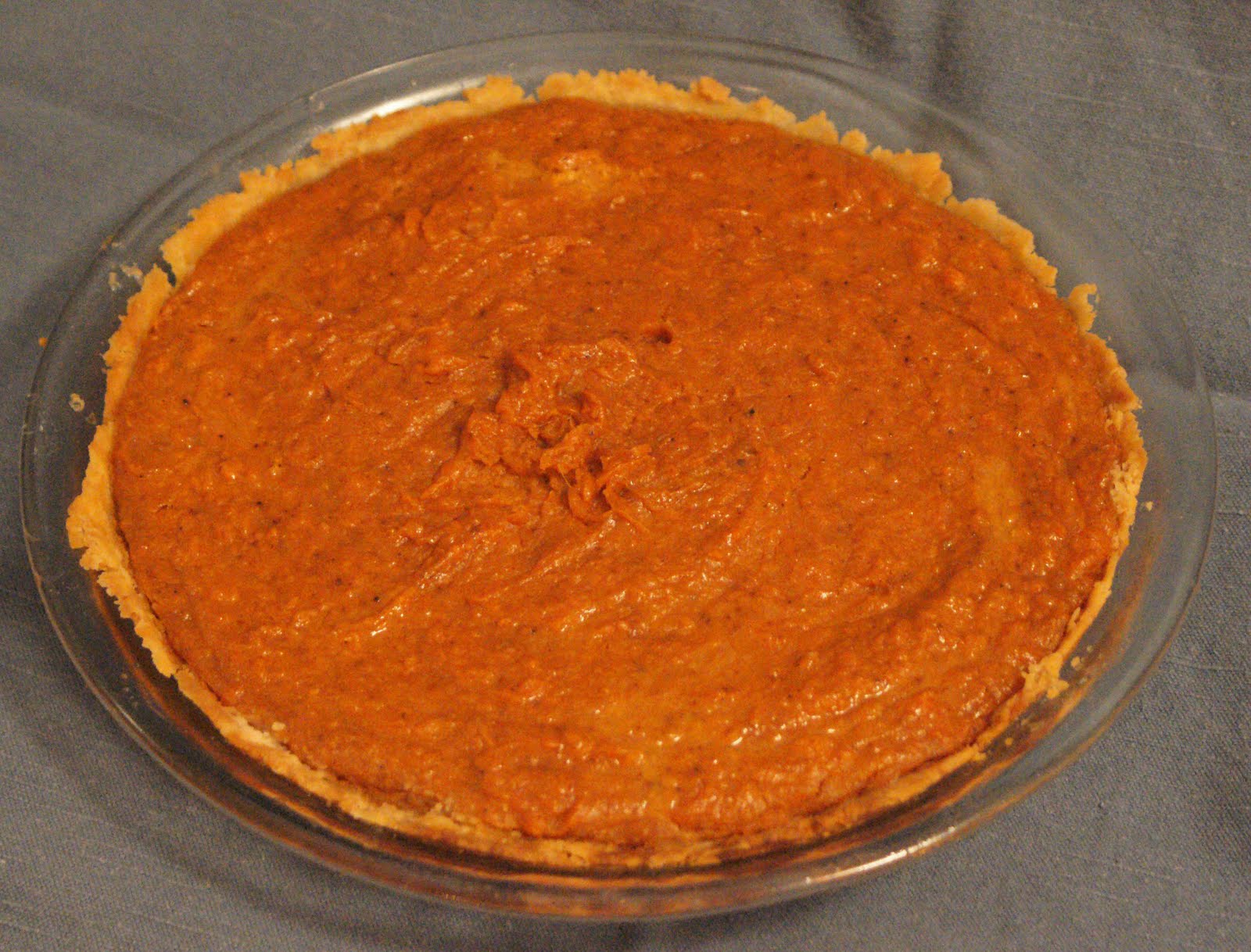
Cousin Beauty's Sweet Potato Pie:

Mississippi Delta Jelly Cake:

Rusty, proud chef and host:

Thursday, November 19, 2009

"Dinner and a Movie"?

Last Saturday, Rusty and I attended a showing of What's Cooking? that was sponsored by the Sundance Outdoor Adventure Society. Our host cooked a delicious turkey, a wonderful butternut squash soup, and a yummy oyster stuffing. We brought a salad and cherry pie, our version of what was served in the movie itself. We talked about the movie and the meals/food depicted during dinnertime, and we added running "food" commentary as the guests asked us questions during the film itself. It was great fun to meet new friends too. Thanks to Sundance for the invite.

Sunday, November 15, 2009

Babette's Feast

Finally, we accomplished the dinner from Babette's Feast.

Potage à la Tortue (Turtle Soup)

Blinis Demidoff au Caviar (Buckwheat Cakes with Caviar)

Cailles en Sarcophage avec Sauce Périgourdine (Quails in Pastry Puff Shell with Foie Gras and Truffle Sauce)


La Salade (Salad Course)

Les Fromages (Assorted Cheeses)

Happy diners:

Les Fruits (Assorted Fresh Fruit)

Savarin au Rhum (Rum Cake)